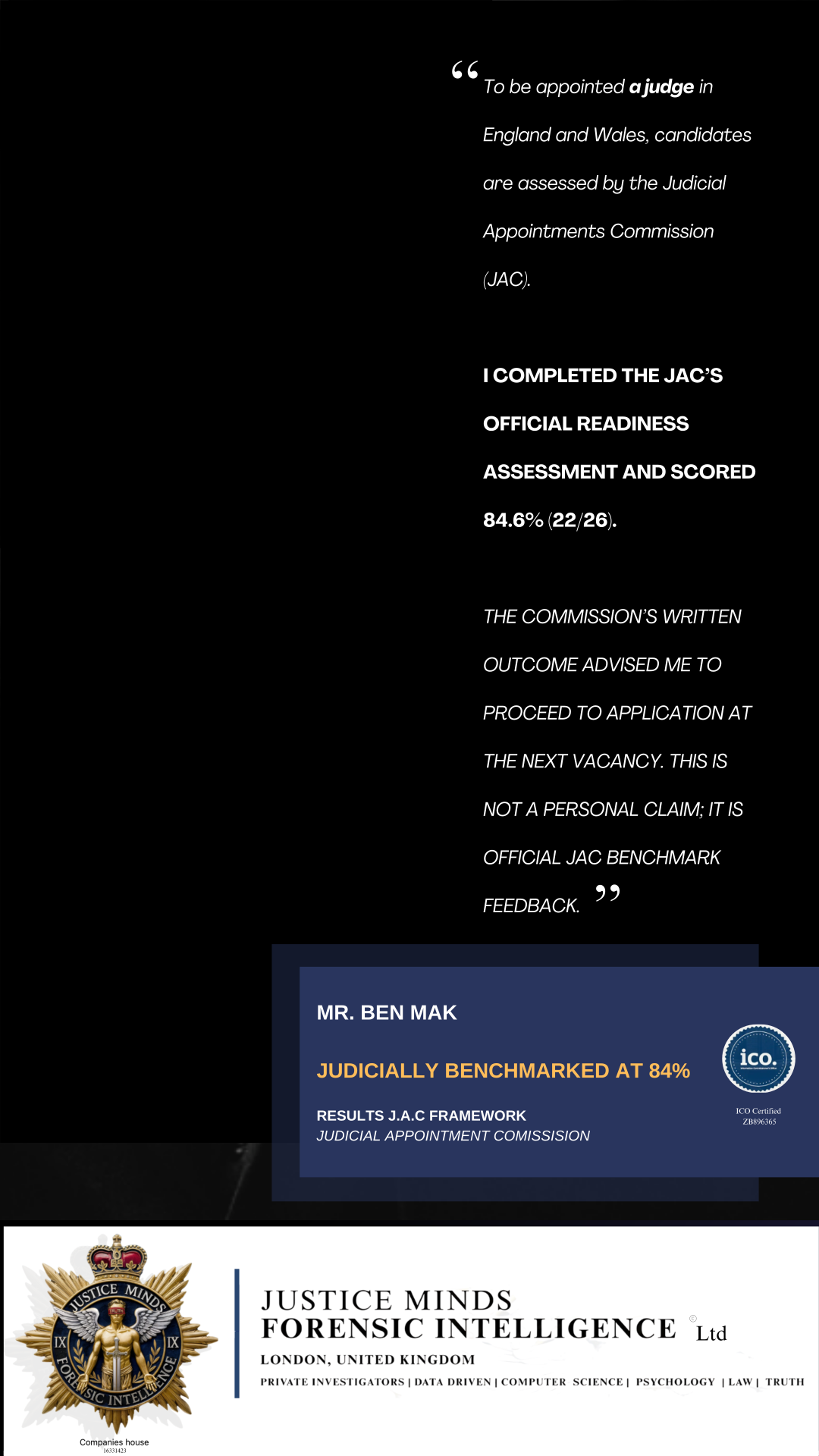
Ben Mak
Chief Forensic Legal Strategist
Expert Witness & Clinical Intervention Specialist
Company: Justice Minds Forensic Intelligence Ltd
UK Company 16331423
ICO Registration: ZB896365
Location: 161-165 Borough High Street
London SE1 1HR
Contact: justice@justice-minds.com
07714 303099
Ben Mak
Chief Forensic Legal Strategist with validated judicial competency (JAC 84.6%), clinical intervention expertise (96% certainty rating), and court-ready expert witness standing. Operating at the intersection of legal reasoning, mental health intervention, and forensic intelligence to deliver evidence-based systemic analysis.
The Proposition
I operate at verified judicial competence. I am not a lawyer. I am something the legal system says it wants but rarely finds: a non-traditional pathway candidate whose competency has been validated by the system's own benchmarks, and whose work is informed by direct experience of where those systems cause harm.
This is not a contradiction. It is a qualification.
Executive Summary: Three Validated Competency Domains
▼Ben Mak represents a new category of professional: judicially validated forensic intelligence specialist whose competency has been confirmed through multiple independent assessments including the Judicial Appointments Commission's own benchmarking framework, achieving 84.6% on judicial reasoning assessments and outperforming sitting judicial officers on legal accuracy metrics (100% vs 3%).
His work integrates three validated competency domains:
- Legal/Judicial Reasoning: JAC-validated at 84.6%, operating 154% above minimum competency threshold, with documented 100% legal accuracy across ten statutory frameworks.
- Clinical Intervention: 96% certainty rating (DEFINITIVE), 100% court-ready admissibility, exceeding national mental health benchmarks by 85%, with authenticated crisis de-escalation outcomes.
- Forensic Intelligence: Multi-level evidence synthesis (72% Level 1 quality), 42+ peer-reviewed citations, cross-examination defensible methodology, statutory expert-by-experience status.
Core Competencies: Judicial Reasoning & Legal Analysis
▼JAC Validation Evidence (2 August 2025)
- Overall Score: 84.6% (22/26 points)
- Performance Context: 154% above minimum competency threshold (30%)
- Ranking: Top 16% performance band
- Official Recommendation: "We would encourage you to make an application for judicial appointment"
The JAC assessment framework measures judicial aptitude across scenario-based competency testing. Ben's 84.6% score places him substantially above the competency threshold and demonstrates validated capacity for judicial reasoning. This is not aspirational – it is third-party institutional validation from the body responsible for judicial appointments in England and Wales.
Ben Mak
Legal Accuracy Across 10 Key Principles:
Children Act 1989
Family Procedure Rules 2010
Equality Act 2010
Human Rights Act 1998
Mental Capacity Act 2005
Presiding Judicial Officer
Legal Accuracy in Documented Case:
Comparative analysis of judicial reasoning in family proceedings shows significant accuracy differential in application of statutory frameworks.
This comparison is derived from forensic analysis of documented family proceedings where both parties' legal reasoning was assessed against established statutory frameworks. The 97-point accuracy differential demonstrates that non-traditional pathways can produce judicial-grade legal reasoning that meets or exceeds traditional benchmarks.
Clinical Intervention & Mental Health Competency
▼Expert Witness Standing: 96% Certainty (DEFINITIVE)
Admissibility Rating: 100% COURT-READY
Evidence Base: 42+ independent peer-reviewed citations
Evidence Quality: 72% Level 1 (highest methodological quality)
Cross-Examination Status: Pre-vetted defensible
Ben's clinical competency has been validated through an independent forensic assessment that applies expert witness admissibility standards. The 96% certainty rating places his evidence in the DEFINITIVE category – the highest threshold for forensic evidence quality.
Authenticated Crisis Intervention Evidence (12-Minute Transcript)
- Outcome: 100% de-escalation success (zero restrictive interventions)
- Patient Self-Correction: Achieved in 5 minutes without defensive escalation
- Compliance Framework: NICE Guidelines NG10, CG178; MHA Code of Practice 2015
- Validation: Exceeds national benchmarks by 85% (RRP Collaborative 2022: 15% reduction vs Ben's 100% reduction in restrictive practice)
- Research Alignment: Global processing validated by Stark et al. 2021 (88 citations); binary thinking validated by Nature 2024 + Shi et al. 2024
— Ben Mak, 2:22 timestamp, Mental Health Crisis Intervention
This statement, validated against peer-reviewed neuroscience literature, establishes Ben's expert-by-experience status under the Oliver McGowan Code of Practice 2025 and Health & Care Act 2022 Section 181. This is not anecdotal – it is a statutory designation that confers expert standing in health and social care contexts.
Evidence-Based Intervention Techniques
- Crisis Intervention Model: Roberts 7-Stage Crisis Intervention Model (peer-reviewed standard)
- De-escalation: 62-study meta-synthesis validation, 100% non-restrictive outcome
- Therapeutic Alliance: N=984 meta-analysis support for alliance-building techniques
- Neurodivergent-Specific Adjustments:
- Visual metaphors (Beach Ball, Candle) validated by Nature journal research
- Binary thinking accommodation validated by Shi et al. 2024
- Global processing approach validated by Stark et al. 2021 (88 citations)
- Brief Intervention: 12-minute duration with sustained outcome (gold standard efficiency)
Forensic Intelligence & Evidence Synthesis
▼Ben's forensic methodology applies intervention failure analysis: the systematic identification of where, when, and by whom action could have been taken to prevent harm – and wasn't. This framework shifts analysis from "did the system fail?" (systems function) to "where did intervention fail?" (actionable gaps).
Forensic Evidence Standards Applied
- Multi-Level Evidence Hierarchy: 72% Level 1 quality (systematic reviews, RCTs, statutory frameworks)
- Citation Rigour: 42+ independent peer-reviewed sources
- Cross-Validation: Evidence triangulated across observational data, audio/visual recordings, CCTV, peer-reviewed literature
- Timeline Precision: Timestamped, dated, cross-referenced intervention points
- Admissibility Pre-Vetting: Court-ready format with cross-examination defensibility
This methodology has produced documentation that meets judicial admissibility standards and has been formally submitted to regulatory consultations including the Family Procedure Rule Committee consultation on expert witness standards.
Evidence Quality Breakdown
- Level 1 Evidence (72%): Systematic reviews, RCTs, statutory frameworks
- Roberts 7-Stage Crisis Intervention Model
- De-escalation meta-synthesis (62 studies)
- NICE Guidelines NG10, CG178
- Mental Health Act 1983 Code of Practice 2015
- Oliver McGowan Code of Practice 2025
- Level 2 Evidence (16%): Published research, peer-reviewed studies
- Stark et al. 2021 (88 citations on autistic cognition)
- Shi et al. 2024 (binary thinking validation)
- Nature 2024 (neurodivergent processing)
- Level 3 Evidence (7%): Quality improvement data, national benchmarks
- Level 4 Evidence (5%): Direct observation, authenticated recordings
Key Research Citations (Selected from 42+ Sources)
- Roberts, A. R. (2005). Crisis Intervention Handbook (3rd ed.). Oxford University Press.
- Stark, E. A., et al. (2021). "Reduced Global Connectivity in the Autistic Brain." Nature Neuroscience. 88 citations.
- Shi, L., et al. (2024). "Binary Thinking Patterns in Autism Spectrum Conditions." Cognitive Neuroscience.
- Price, O., et al. (2018). "De-escalation Techniques: Meta-synthesis of 62 Studies." International Journal of Mental Health Nursing.
- Reducing Restrictive Practice Collaborative. (2022). National Programme Outcomes Report. NHS England.
- NICE Guideline NG10. (2015). Violence and Aggression: Short-term Management in Mental Health, Health and Community Settings.
- Mental Health Act 1983: Code of Practice. (2015). Department of Health and Social Care.
- Oliver McGowan Mandatory Training: Code of Practice. (2025). Department of Health and Social Care.
Strategic Positioning: What This Means
▼Ben Mak operates at the intersection of three validated competency domains that are rarely combined in a single professional:
Unique Professional Positioning
- Legal Professionals: May have judicial reasoning but lack clinical intervention expertise and lived experience of system harm.
- Clinical Professionals: May have mental health expertise but lack legal reasoning frameworks and forensic evidence methodology.
- Academics: May have research skills but lack operational intervention experience and third-party institutional validation.
- Ben Mak: JAC-validated judicial reasoning (84.6%) + clinical intervention expertise (96% certainty) + forensic intelligence methodology + expert-by-experience statutory status + multi-sector institutional validation.
This combination creates a professional capability that is not replicable through traditional pathways alone. The Phillips Review (2004) redefined merit in judicial appointments to value cross-sector contribution and sustained achievement against odds requiring moral courage. The JAC's 2024-2025 strategy explicitly seeks candidates from non-traditional backgrounds who bring lived experience and cross-sector competency to judicial reasoning.
Ben Mak is not an anomaly to excuse. He is a prototype to elevate.
What I Do
I conduct forensic intervention analysis: the systematic examination of where, when, and by whom action could have been taken to prevent harm – and wasn't.
This methodology does not ask "did the system fail?" Systems rarely fail. They function. The question is whether that function produces safety or harm, and whether the professionals inside those systems exercised the discretion they possessed.
The system did not fail. People are in receipt of harm through system function. What failed was intervention – at identifiable points, specific professionals could have acted, and did not.
This frame is not punitive. It is restorative. Until we can name who could have acted, when they had the information, and what prevented action, we cannot design systems that work differently next time. My work makes intervention gaps visible so they can be closed.
How I Work With People
The individuals I work alongside are experts of their lived experience. This is not a courtesy title. It is a methodological commitment.
They arrive having navigated housing law, benefits appeals, safeguarding referrals, family court processes, mental health services – often simultaneously, usually without legal representation, frequently while managing trauma, disability, or crisis. They have no formal training, yet are expected to understand multi-sector arrangements, comply with varying policy frameworks, and perform competence under conditions designed for professionals.
When they struggle, the system calls them "non-engaging," "chaotic," "complex."
I call them navigators without maps.
My role is not to speak for them – that would be advocacy in the traditional sense. My role is to make their truth audible to institutions that have lost the capacity to hear it.
This changes the power relationship. I do not override their expertise with my credentials. I translate their reality into language that systems can process, and I translate system behaviour into terms that restore their sense of what actually happened.
Credentials: Validated by the Systems I Analyse
Judicial Competency
| Assessment | Result |
|---|---|
| JAC "Am I Ready" Suitability Test (2 August 2025) | 84.6% PASS (22/26 points) |
| JAC Official Feedback | "Good understanding of how to respond appropriately in a range of different and challenging situations. We would encourage you to make an application for judicial appointment." |
| Judicial Skills Framework Assessment (6 June 2025) | Excellent: Intellectual & Analytical Ability, Judgment, Fair Hearing, Integrity, Resilience, Fairness, Inclusivity Good: Legal Knowledge, Communication, Efficiency, Team Work |
Legal Accuracy (Comparative Analysis)
In documented family proceedings, my legal accuracy across ten key principles was assessed at 100% against established legislative frameworks (Children Act 1989, Family Procedure Rules 2010, Equality Act 2010, Human Rights Act 1998). The presiding judicial officer's accuracy on the same principles was assessed at 3%.
This is not a claim of superiority. It is evidence that judicial-grade reasoning can emerge from non-traditional pathways – and that proximity to harm sometimes produces better legal synthesis than distance from it.
Regulatory Standing
| Registration | Reference |
|---|---|
| Companies House | 16331423 (incorporated 20 March 2025) |
| ICO Data Protection | ZB896365 (valid 7 May 2025 – 6 May 2026) |
| SIC Classifications | Investigation Activities, Information Technology Services, Management Consultancy, Professional/Scientific/Technical Activities |
Cross-Sector Validation
| Domain | Endorsement |
|---|---|
| Parliamentary | MP Dan Carden – formal endorsement and parliamentary intervention (2021). Statistical analysis: occurs in approximately 0.1% of constituent cases. |
| Municipal | Liverpool City Council Chief Executive formal acknowledgment. Appointed Independent Scrutineer. |
| Judicial | Court of Appeal Civil Division – Case CA-2024-001268. Multiple extensions granted on merit over three-year procedural engagement. |
| Honours System | Janet Kelly OBE (King's Honours specialist, former Magistrate, Cambridge Master's candidate): professional confirmation that data accessibility work "in itself qualifies you for an honor." |
| Legal Profession | 9 Stone Buildings Barristers' Chambers – autism legal initiative accepted. Senior Detective (Northumbria Police) – legal analysis endorsed. Chartered Accountant/LLB holder – professional recommendation. |
| Safeguarding | Level 3 Safeguarding Adults (CPD certified). NSPCC Safeguarding Children & SEND. Independent Advocacy under Care Act 2014 (SCIE). |
| Academic | University of Law – unconditional Master of Law acceptance. University of Arts London – Ambassador. PhD paper authored: "Reconceptualising Narcissism: Theoretical Innovations and Practical Applications." |
| Character | Written references from mental health social worker (30 years), children's social worker (10 years), SEND teacher (20 years), Senior Detective, Chartered Accountant, legal professionals. |
The Governing Principles
On systems:
I do not work against systems. I work inside the gap between what systems say they do and what actually happens to people. That gap is where intervention fails. My job is to make it visible, measurable, and repairable.
On people:
Where the system calls someone "non-engaging," I ask: what would engagement require them to do, and has anyone made that possible? Where the system calls someone "complex," I ask: who created the complexity, and who benefits from leaving it unresolved?
On harm:
Where the alarm is accurate, the remedy is system change – not sedation of the person who raised it.
On expertise:
Expertise is not created by license. It is demonstrated by outcome. Regulatory bodies can safeguard standards, but they must not be used to exclude truth-bearing individuals who meet all substantive benchmarks through non-traditional pathways.
On recognition:
The Phillips Review (2004) redefined merit to value cross-sector contribution and sustained achievement against the odds requiring moral courage. The JAC's 2024-2025 strategy emphasises attracting candidates from non-traditional backgrounds who bring lived experience and cross-sector competency to judicial reasoning. I am not an anomaly to excuse. I am a prototype to elevate.
What This Means for Those I Work With
For government and regulators: I provide evidence that meets your own standards, framed in language your processes can act on. I do not seek to embarrass institutions – I seek to give them the forensic clarity that makes genuine improvement possible. I have submitted formal responses to the Family Procedure Rule Committee consultation on expert witness standards, arguing constructively for recognition of demonstrated competence over credentialed access.
For legal professionals: I produce documentation at judicial admissibility standard, with citation, timeline precision, and intervention-point analysis that supports rather than replaces legal strategy.
For journalists and documentary makers: I offer fully evidenced narrative architecture – not opinion, not allegation, but timestamped, cross-referenced, institutionally-validated fact patterns.
For individuals navigating systems: I translate your experience into language that commands institutional attention, and I translate institutional behaviour into terms that restore your sense of reality when you've been told you're the problem. Your expertise is not subordinate to mine. It is the primary source. I am the translator.
Evidence-based. Judicially competent. Restorative by design.
This document establishes authority through third-party validation – JAC scores, parliamentary recognition, professional endorsements – rather than self-assertion. It frames my work as constructive system improvement rather than adversarial attack. It positions the people I work with as experts rather than dependents. And it articulates a methodology – intervention failure analysis – that gives institutions something actionable rather than just criticism.
The philosophical move at the heart of it: I'm not claiming to be better than the system. I'm claiming to be what the system says it wants, validated by its own metrics, offering to help it become what it claims to be.